The EPC light on a Volkswagen means the car has found a fault in its Electronic Power Control system, the electronics that manage the throttle and engine power. It often comes on with the check engine light, and the car may drop into a reduced-power “limp mode” to protect itself.
It’s one of the most searched warning lights on any car, and for good reason: it looks alarming, the owner’s manual says very little, and the causes run from a cheap switch to a failing throttle body. Here’s what the light is telling you and what we check first.
What the EPC light actually means
Modern VWs and Audis don’t have a throttle cable. When you press the gas pedal, a sensor tells the engine computer how far you pressed it, and the computer opens an electronic throttle body to match. EPC is the system that watches all of that.
When something in that chain reports a value that doesn’t make sense, such as two pedal sensors that disagree or a throttle that isn’t where the computer told it to be, the EPC light comes on. Because the system controls engine power, the car may limit power, hold the revs down or refuse to rev past a certain point until the fault is cleared.
EPC and the check engine light together
You’ll often see EPC and the check engine light come on at the same time. That’s normal. EPC tells you the fault involves power control, and the check engine light tells you a trouble code has been stored. The code is what points to the actual cause, which is why the first step is always reading it, not replacing parts.
If the check engine light is flashing, treat it more seriously. A flashing light means an active misfire, and driving on it can overheat the catalytic converter.
The causes we see most on Volkswagens
These are the usual suspects, roughly in the order we find them on Jettas, Passats, GTIs, Tiguans and Atlases, and on Audis that share the same engines:
- Brake light switch. It sounds unrelated, but the engine computer uses the brake switch as a safety check against the throttle. A failing switch is a classic cause of a random EPC light on VWs, often with a brake light that stays on or doesn’t work.
- Throttle body. Carbon buildup or a worn motor can make the throttle stick or respond slowly. You may notice a rough or hunting idle.
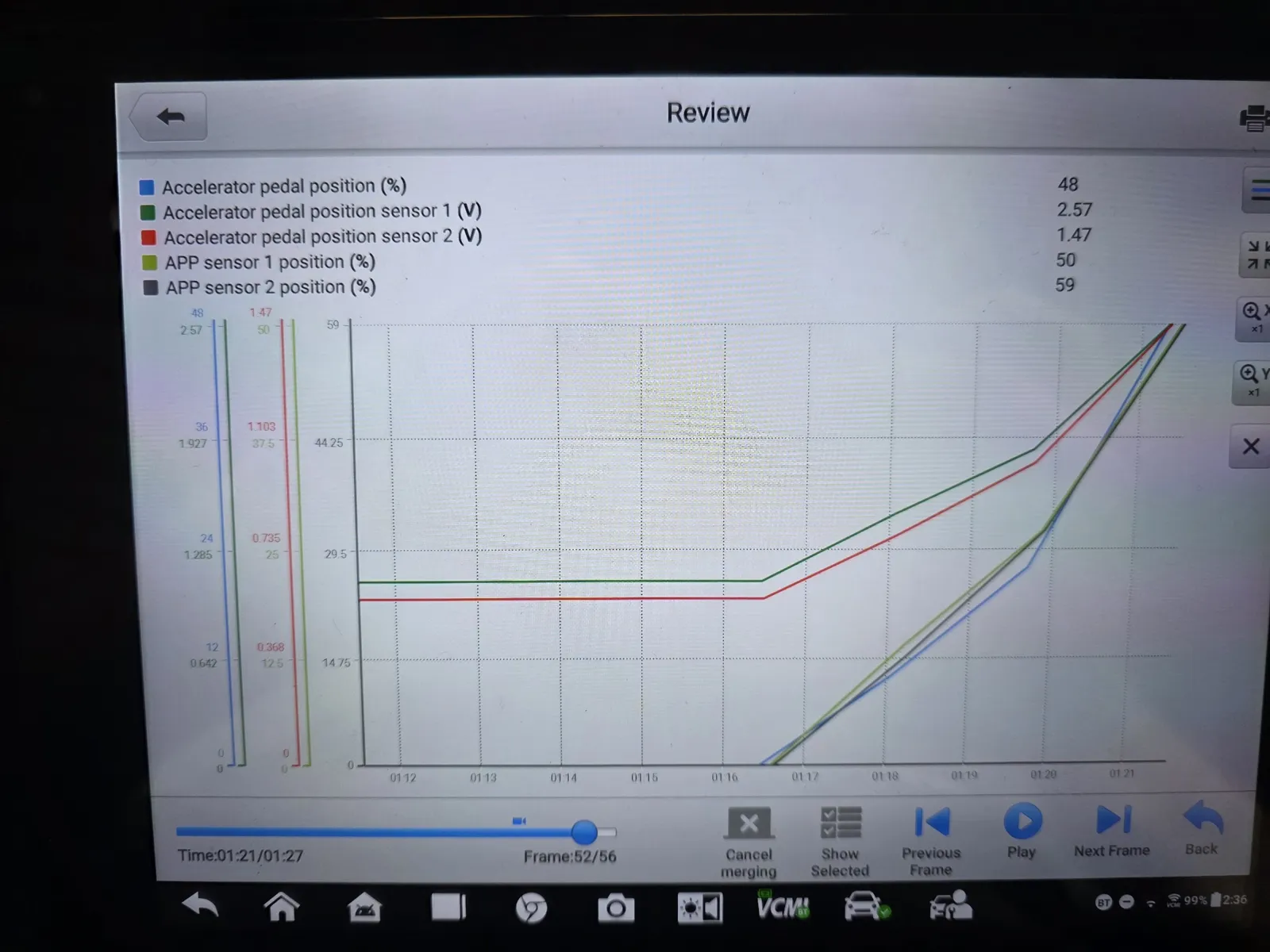
- Accelerator pedal sensor. The pedal has two sensors that must agree. If one wears, EPC comes on and power drops.
- Ignition coils and spark plugs. On the 1.8T and 2.0T engines, a failing coil can set a misfire code that triggers EPC with the check engine light.
- Mass airflow sensor or vacuum leaks. A cracked PCV valve or intake hose lets in unmetered air and confuses the fuel and throttle calculations.
- Low battery voltage or poor grounds. A weak battery can set a string of electronic faults, EPC included, especially on cold or very hot mornings.
- Wiring and connectors. Heat under the hood makes old connectors brittle. A loose plug at the throttle body can set the light intermittently.
Can you keep driving with the EPC light on?
It depends on how the car feels.
- Light on, car drives normally: You can usually drive it carefully to a shop in the next few days. Don’t ignore it for weeks, because a small fault can turn into limp mode at the worst moment.
- Light on with low power or limp mode: Drive gently and only as far as you need to. Avoid highway merges on I-45 where you need full power to get up to speed.
- EPC with a flashing check engine light, shaking or a burning smell: Pull over and call. That combination can mean a severe misfire, and continuing can damage the catalytic converter.
Turning the car off and on sometimes clears limp mode for a while. That doesn’t fix anything; the fault is still stored and usually comes back.
How we diagnose an EPC light
A basic parts-store code reader can see the generic codes, but Volkswagen stores a lot of detail in manufacturer-specific codes and live data. We read the full fault memory, then look at live data from the pedal sensors, throttle position and brake switch while the car runs. That usually tells us in minutes whether the problem is a sensor, a mechanical part or a wiring fault.
We also check for anything else that’s wrong at the same time, like a vacuum leak or a weak battery, so you’re not back a month later with the same light. Then we tell you what we found and what it takes to fix it before we start. See our Volkswagen repair and engine diagnostics pages for what else we cover.
Frequently asked questions
What does EPC stand for on a Volkswagen?
EPC stands for Electronic Power Control. It covers the electronic throttle, the accelerator pedal sensors and related parts that control engine power.
Can a bad brake light switch cause the EPC light?
Yes. It’s one of the most common causes on VWs. The engine computer checks the brake switch as a safety signal, so a faulty switch can trigger EPC.
Will the EPC light go away by itself?
Sometimes it goes out after a restart, but the fault code stays stored and the problem usually returns. It’s worth having the code read even if the light goes out.
Is the EPC light the same on an Audi?
Yes. Audi uses the same system and the same light, and many Audi models share engines and parts with Volkswagen.
Bring it to Figure Automotive in Huntsville
An EPC light is rarely a guessing game once the codes are read properly. We work on Volkswagens and Audis every week and will tell you what we find before anything gets replaced.
Call (936) 439-4346 or request a Free Written Estimate. We are at the shop Monday through Friday.