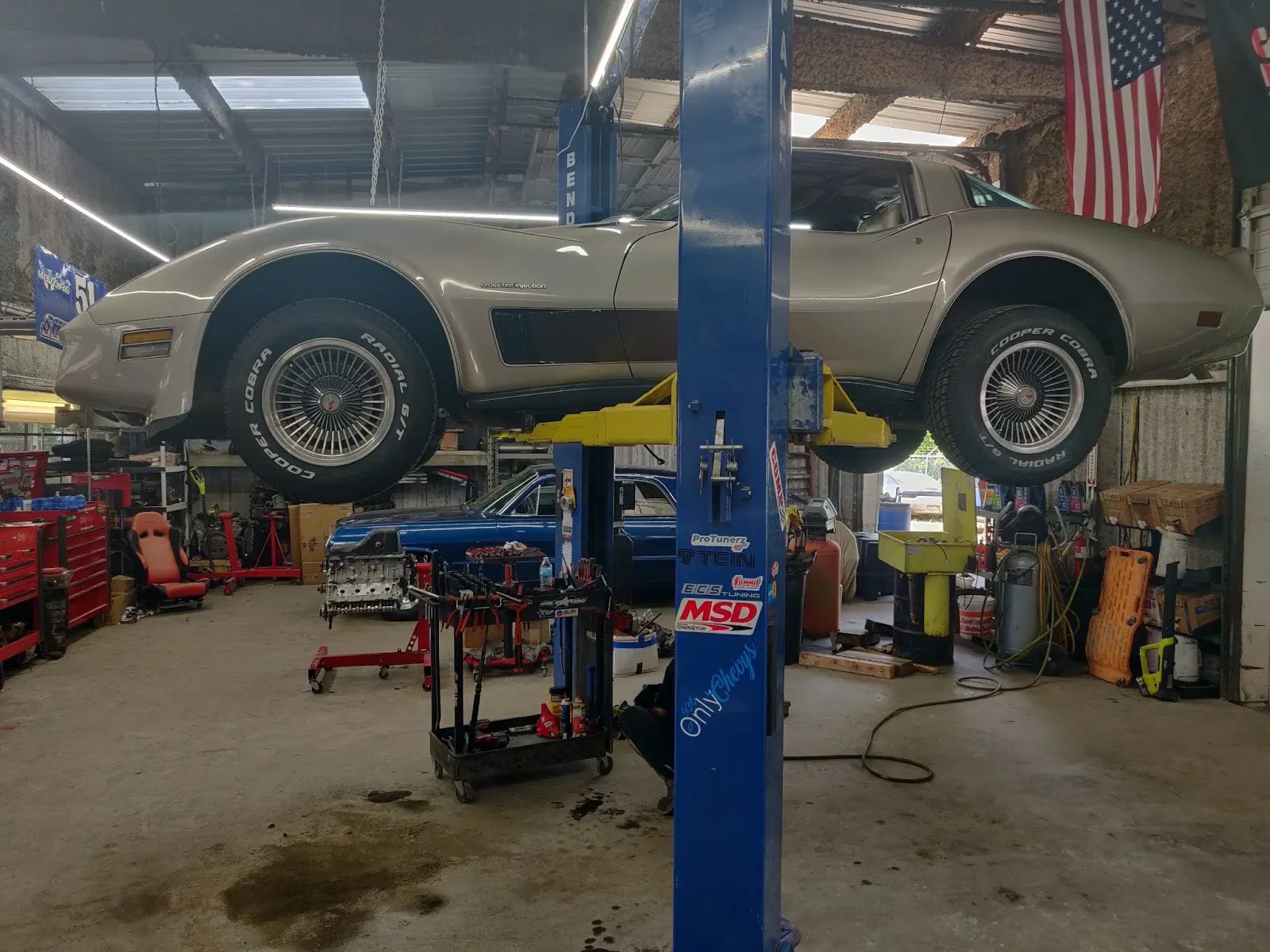
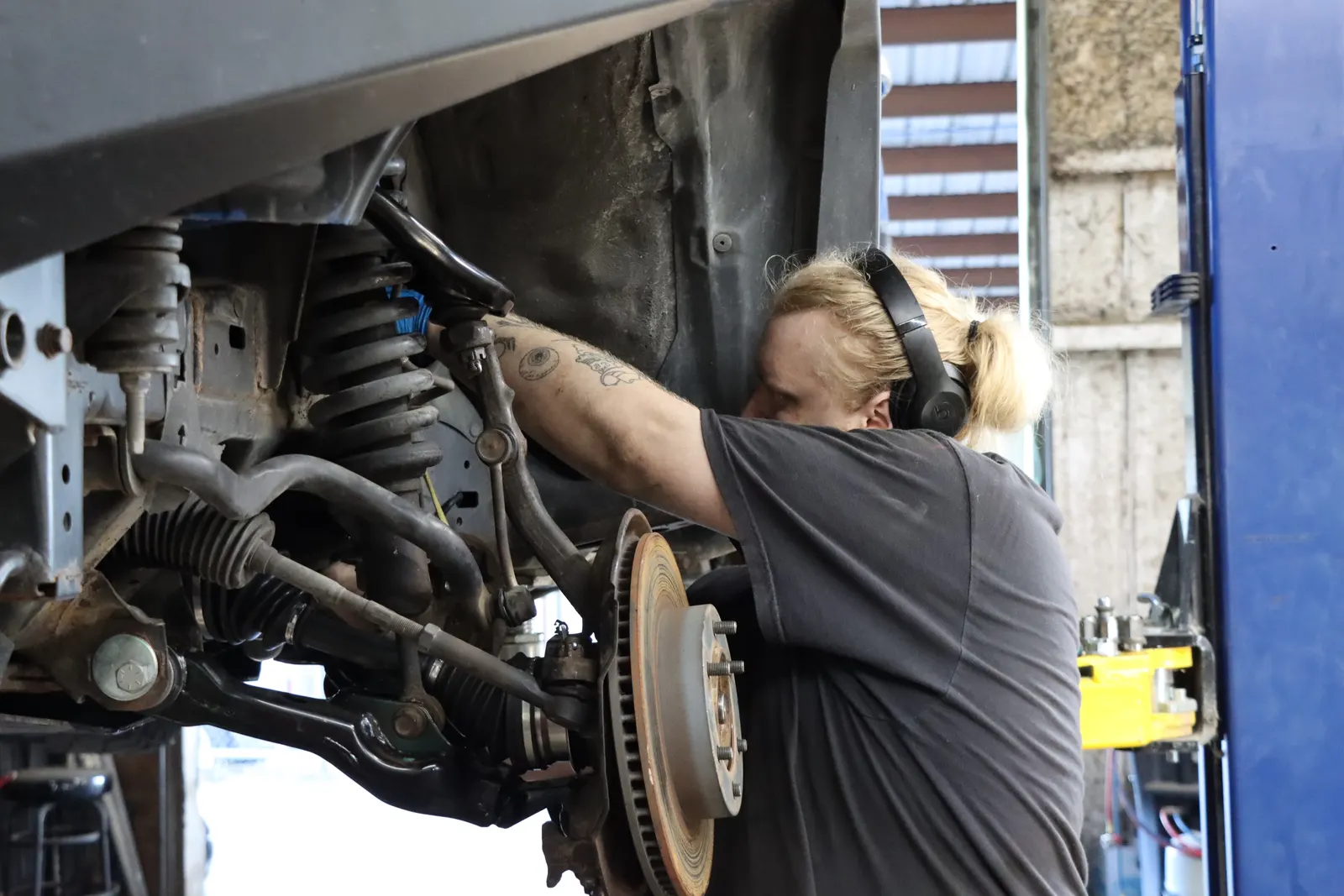
Brake repair in Huntsville, TX, from brake inspections and pad and rotor replacement to routine brake service, to keep your vehicle safe and reliable.
Problem with your brakes?Request a call back.
Or call (936) 439-4346, Mon-Fri 8AM-5PM
“These guys are true old-school gearheads.”
“Always honest, except on the pricing, they always seem to charge me less than the quote.”
“If you gotta problem, they figure it out.”
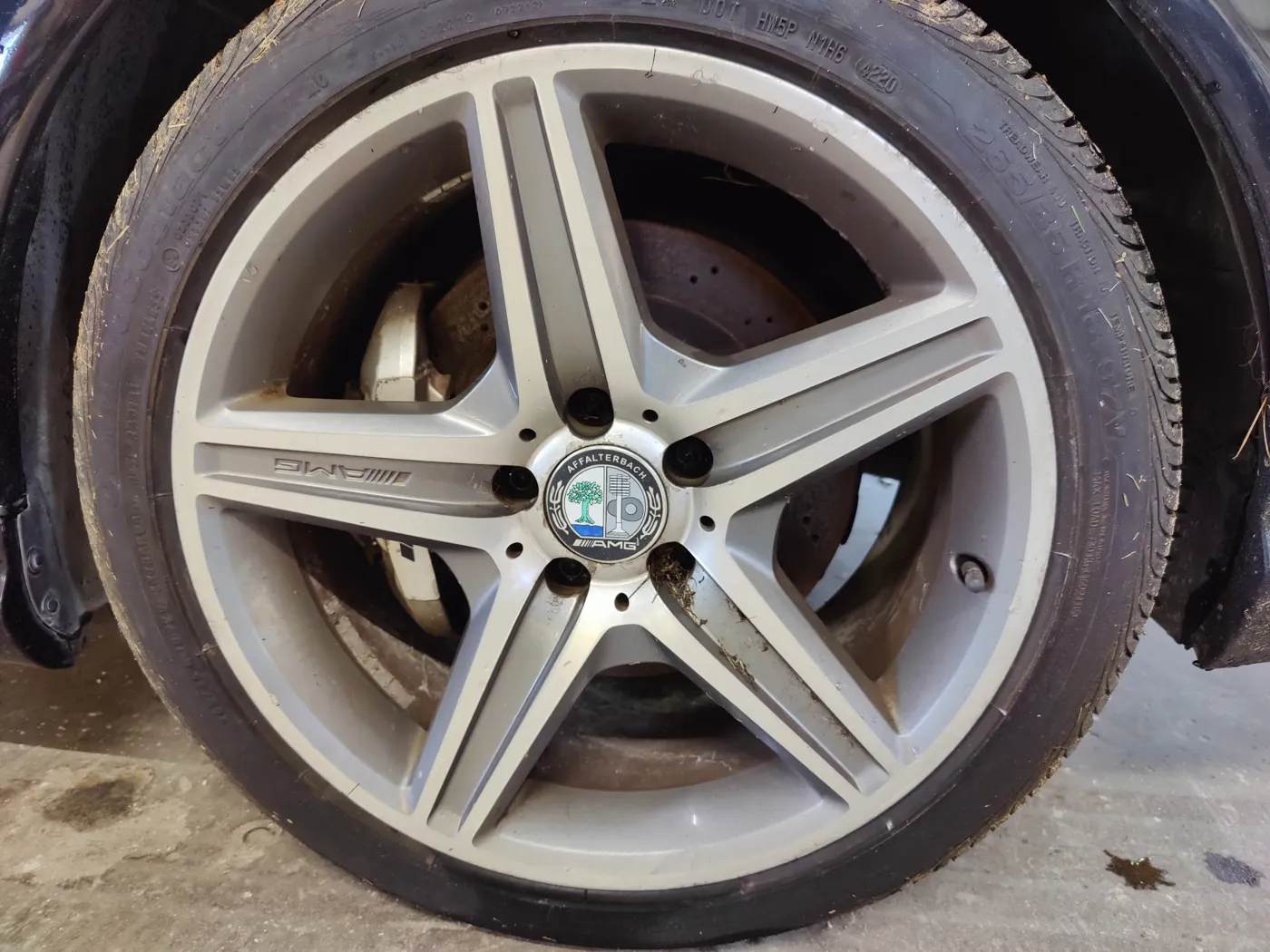
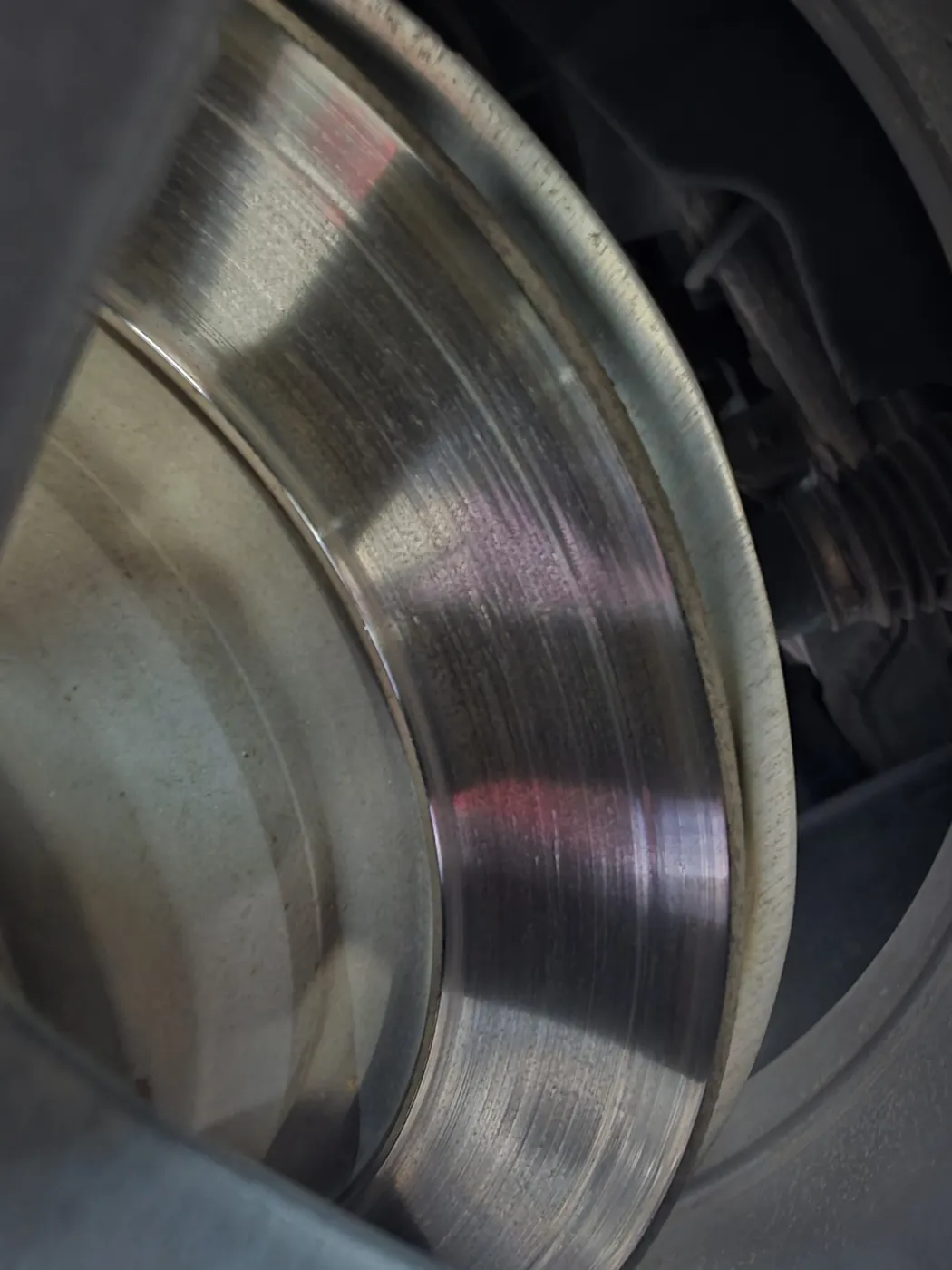
High-pitched squealing often indicates worn brake pads, while grinding sounds suggest metal-on-metal contact between the brake pads and rotors, signaling the need for immediate brake service.
If the brake pedal vibrates or pulses when pressed, it may indicate warped rotors or uneven wear on the brake pads, reducing braking effectiveness.
If your car takes longer to stop than usual, it could mean that the brake pads are worn down, brake fluid is low, or there’s another issue affecting braking power.
A brake warning light on the dashboard indicates a problem with the braking system. This could range from low brake fluid levels to more serious issues requiring immediate inspection.
If the brake pedal feels soft or spongy when pressed, there may be air in the brake lines, a leak, or a failing master cylinder, all of which compromise braking ability.
If the car pulls to one side when braking, it may indicate uneven brake pad wear, a stuck caliper, or an issue with brake fluid distribution, all of which affect steering control during stops.
A strong burning odor when braking may indicate overheated brakes, especially after prolonged or heavy braking. This could lead to brake fade, which reduces braking power.
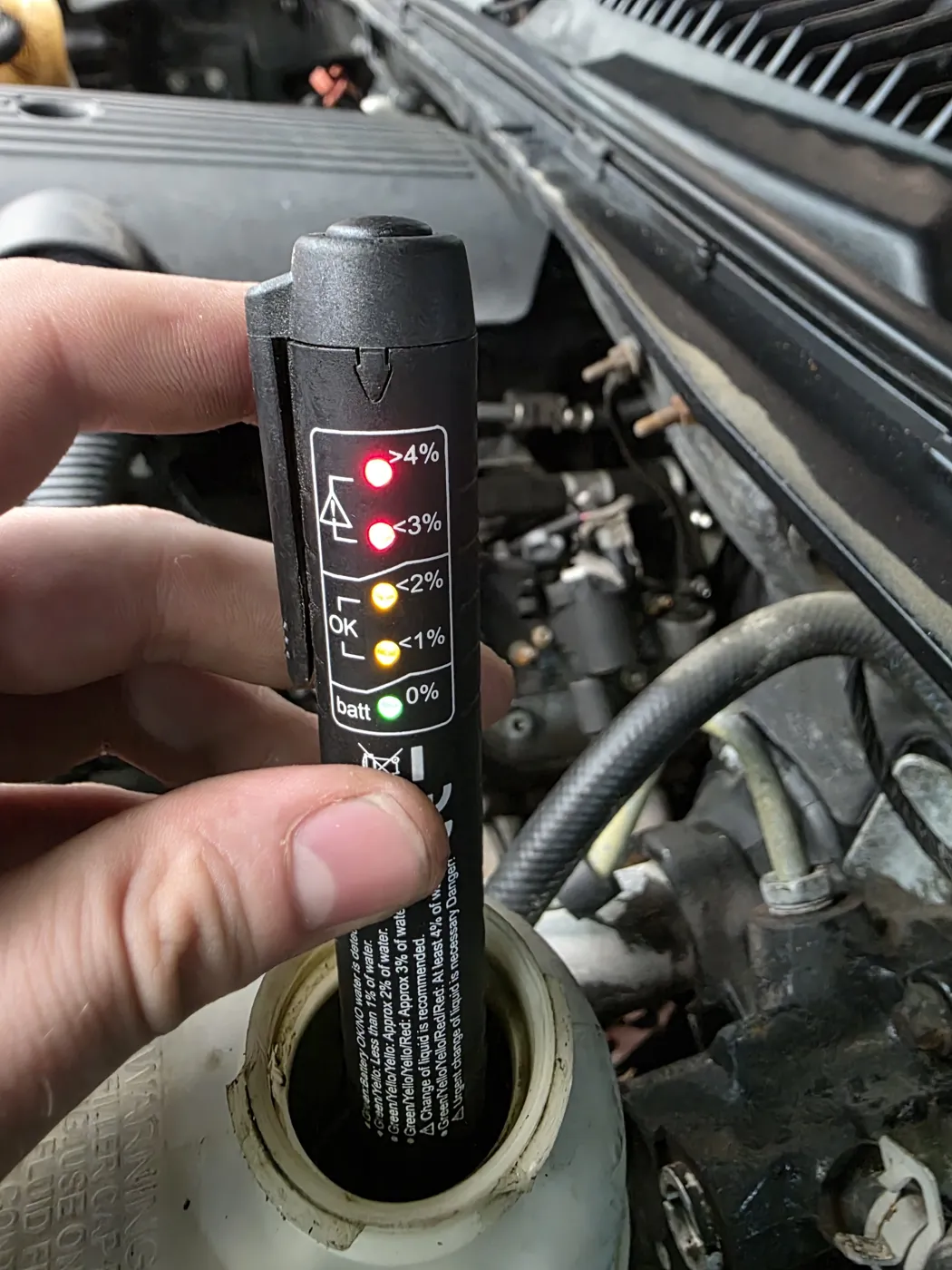
If the brake fluid level is low, it can affect brake pressure and performance. A leak or contamination may be the cause, which should be addressed promptly.
A hard or stiff brake pedal can indicate a problem with the brake booster, which assists in applying braking force. This makes braking more difficult and can compromise response time.
Excessive brake dust can mean the brake pads are wearing out quickly, which could be a result of poor-quality pads or a sign that replacement is needed soon.
Noticing any of these?We diagnose first and give you a written estimate before any work begins.
If you experience any of these symptoms, it’s advisable to have your brakes checked promptly.
Still have questions?
Contact Us
At Figure Automotive, 440 FM 2821 Rd W, Suite B in Huntsville, TX, with easy access off I-45. We are open Monday to Friday, 8AM to 5PM. Call (936) 439-4346 or request a call back and we will get you scheduled.
It’s recommended to have your brakes inspected at least once a year or every 12,000 miles.
Common indicators include squeaking or grinding noises when braking, a vibrating brake pedal, increased stopping distances, or the vehicle pulling to one side during braking.
Brake pads generally last between 25,000 to 50,000 miles. However, their lifespan can vary based on driving habits, vehicle type, and operating conditions.
Brake pads are components that press against the brake rotors to create friction, slowing down the vehicle. Rotors are the discs attached to the wheels that the pads clamp onto.
In some cases, yes. If the rotors are in good condition without significant wear or damage, replacing only the brake pads may be sufficient.
Warping can result from excessive heat due to heavy braking, rapid cooling (such as driving through water after brakes are hot), or uneven tightening of lug nuts.
The cost varies based on vehicle type and service provider. On average, replacing brake pads and rotors can range from $250 to $400 per axle.
A brake fluid flush involves removing old brake fluid and replacing it with fresh fluid. This service is typically recommended every 2 to 3 years or as specified by your vehicle’s manufacturer to maintain effective braking and prevent corrosion.
New brakes may squeak due to high metal content in the brake pads, moisture accumulation, or lack of lubrication on contact points. If the noise persists, it’s best to have them inspected to ensure proper installation and function.
No, the brake warning light indicates a potential issue with your braking system, such as low brake fluid or worn components.