
Rebuild the engine when the block and heads are sound, the car is worth keeping, and a good replacement engine is hard to find or of unknown history. Replace it with a used or remanufactured engine when a known-good unit is readily available and the original block is cracked or badly damaged. And if the car’s value is far below the repair, it may be time to move on.
There’s no single right answer, but there is a right way to decide. Here’s what a rebuild actually involves, how it compares with the alternatives, and the questions we ask before recommending one.
What a rebuild actually involves
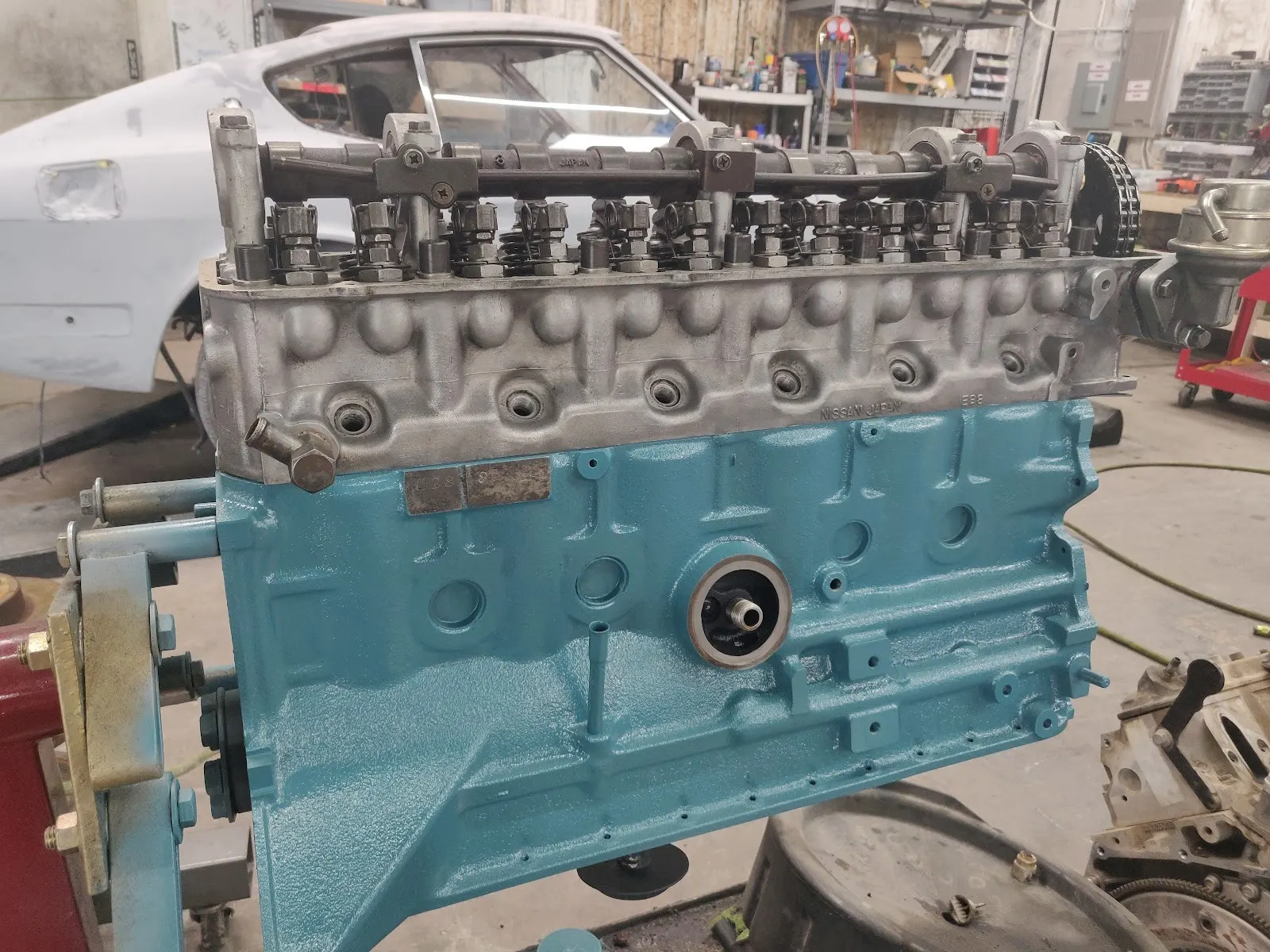
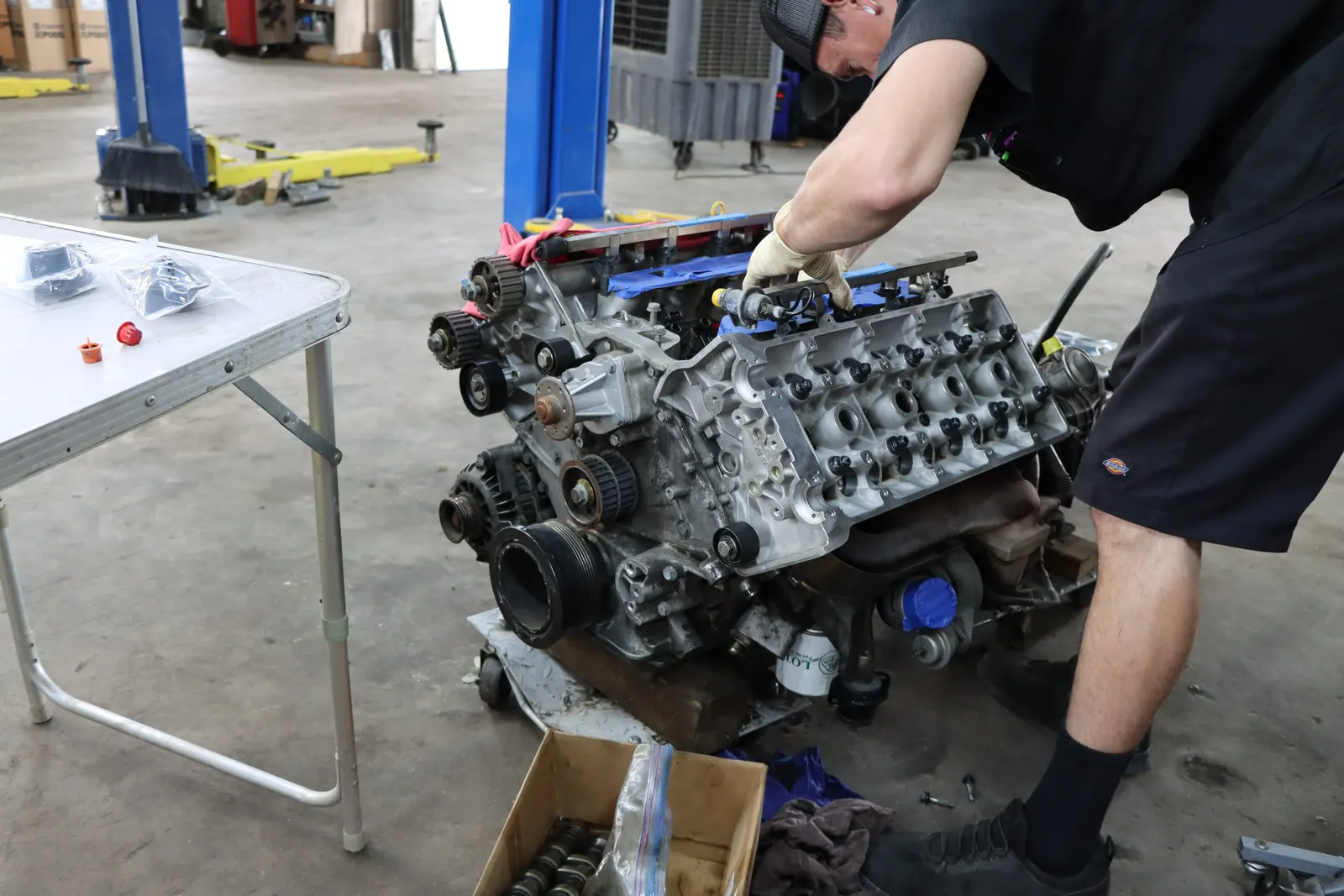
“Rebuilding” an engine means taking it completely apart, inspecting and measuring every part, machining what can be machined and replacing what can’t. A proper rebuild usually includes:
- Removing the engine and fully disassembling it
- Cleaning and inspecting the block, crankshaft, heads and connecting rods
- Measuring cylinders, journals and clearances against factory specs
- Machine work as needed: boring or honing cylinders, grinding the crank, resurfacing the heads and doing a valve job
- New pistons or rings, bearings, gaskets, seals, timing components, oil pump and often the water pump
- Careful assembly to spec, then priming and break-in
The point is that every wear part is new and every critical surface has been checked. A rebuilt engine done well is often better than the one that left the factory, because known weak points can be corrected along the way.
Used, remanufactured or rebuilt
| Option | What it is | Upside | Watch out for |
|---|---|---|---|
| Used engine | Pulled from a salvage vehicle | Fastest and often the least up front | Unknown history and mileage, short warranty |
| Remanufactured engine | Rebuilt in a factory to a standard spec | Consistent quality, longer warranty | Not available for every engine, long lead times for some |
| Rebuilt engine | Your engine, rebuilt by a shop | You know its history, weak points can be fixed, keeps the original engine | Takes longer, depends on the shop’s skill |
When rebuilding makes more sense
- The car is worth keeping. A truck you plan to drive for another ten years, a European car in great shape, or a classic.
- Replacement engines are rare or questionable. Many European engines, older engines and performance engines are hard to find used with known miles.
- Matching numbers matter. On classics and collector cars, keeping the original engine protects the value.
- The damage is limited. A spun bearing, a worn timing set or a failed head gasket on an otherwise healthy block is often a good rebuild candidate.
- You want improvements. A rebuild is the time to fix known weak points or add performance parts.
When replacing makes more sense
- The block is cracked or badly damaged, such as from a thrown rod.
- A low-mileage used or remanufactured engine is easy to get for a common engine, like many truck V8s.
- Time matters most. A replacement engine usually goes in faster than a rebuild.
And sometimes neither makes sense. If the repair is more than the car is worth and the rest of it is worn out too, we’ll say so.
How engines get to this point
Most engines we rebuild didn’t fail out of nowhere. Common causes are overheating that warped a head or blew a head gasket, oil starvation from low oil or long change intervals, timing failures like a stretched chain or worn cam phasers, and lifter failures such as the Hemi tick left too long. Catching those early is always cheaper, which is why we take noises, flashing check engine lights and overheating seriously.
Questions to ask before you decide
- What exactly failed, and why? Fixing the result without fixing the cause means it can happen again.
- Is the block and head damage repairable? Measurements and inspection answer this, not guesses.
- What’s the vehicle worth, and what else does it need?
- What’s the history and warranty of the replacement option?
- How long will each option take?
- What else should be replaced while the engine is out? Clutch, rear main seal, motor mounts, hoses and the cooling system are common add-ons.
Great guys, got my bmw motor completely swapped and they did a wonderful Job even swapped over an entire harness afterward to make sure everything was as it should be. Before I found these guys I thought my car was dead but Nick and Donovan breathed life back into my e46 and I couldn’t be more happy with the end results.
Chris Jeffcoat, Google review
Other shops in the area send us their harder engine jobs too:
As a mechanic at a neighboring repair shop, Figure Auto is a reliable shop to send more complex repair jobs that we’re not equipped to handle at our shop.
Jefferson Smith, Google review
See our engine rebuild, engine swaps, engine repair and classic car repair pages for more.
Frequently asked questions
Is it worth rebuilding an engine?
It is when the car is worth keeping, the block and heads are sound, and a good replacement engine is hard to find. It often isn’t on a car worth far less than the repair.
Is a rebuilt engine as good as new?
A well-done rebuild with new wear parts and proper machine work can be as good as or better than new, because known weak points can be corrected.
Is a used engine a good idea?
It can be, for common engines with known low mileage. The risk is unknown history, so get as much information and warranty as you can.
How long does an engine rebuild take?
Longer than a swap, because of disassembly, machine work and careful assembly. Parts availability for your engine is the biggest factor.
Bring it to Figure Automotive in Huntsville
If your engine is hurt, we’ll tell you straight whether it’s worth rebuilding, replacing or neither. We do complete engine rebuilds and swaps in-house, and you’ll get a written estimate first.
Call (936) 439-4346 or request a Free Written Estimate. We are at the shop Monday through Friday.