A steady check engine light on a Mercedes-Benz usually means the engine computer has stored an emissions or sensor fault, and most of the time the car is still safe to drive for a short while. If the light is flashing, or the car is shaking, losing power or running hot, stop driving and have it looked at right away.
The tricky part with Mercedes is that the light often comes on with no message in the instrument cluster. Here are the causes we find most on C-Class, E-Class, GLC and ML/GLE models, and what to do about each.
Steady vs. flashing on a Mercedes
| What you see | What it usually means | What to do |
|---|---|---|
| Steady yellow light, car drives normally | Stored fault, often emissions or a sensor | Book a diagnosis within a few days |
| Steady light plus a message or reduced power | Fault affecting how the engine runs | Drive gently, get it checked soon |
| Flashing light, shaking or misfiring | Active misfire that can damage the catalytic converter | Pull over and have it towed or checked right away |
The causes we see most on Mercedes-Benz
Gas cap and evaporative (EVAP) leaks
A loose or worn fuel cap, or a small leak in the evaporative emissions system, is one of the most common reasons for a check engine light on any Mercedes. The purge valve that controls fuel vapor is a frequent failure too. The car drives perfectly, but the light stays on until the leak is fixed and the system passes its self-test.
Camshaft adjuster magnets leaking oil
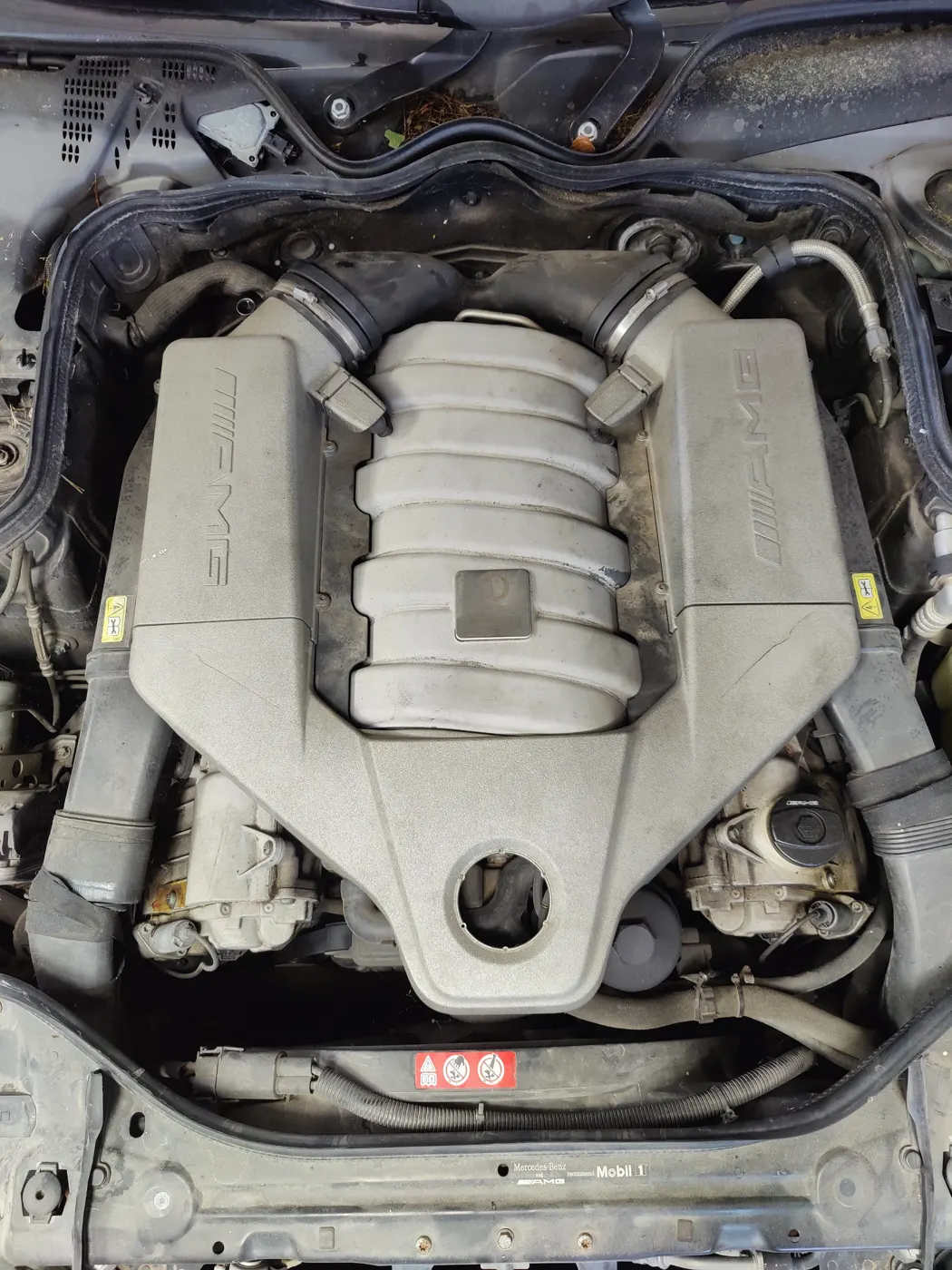
This one deserves its own section. The camshaft adjuster solenoids, often called cam magnets, sit on the front of many Mercedes engines, including the V6 in older E350s and C350s and the four-cylinder and V6 engines in newer C300s and GLCs. Their seals harden with age and heat, and engine oil starts to seep out through the electrical connector.
The first sign is usually a camshaft position code and a check engine light. What makes it serious is where the oil goes next: it can wick through the wiring harness toward the engine computer. Catching it early usually means replacing the magnets and cleaning the connector. Leaving it can mean a contaminated harness, which is a much bigger repair.
Oxygen sensors and catalytic converter efficiency
Upstream and downstream oxygen sensors wear out with mileage. A slow sensor can set a fuel-trim or catalyst-efficiency code. Replacing the sensor is straightforward, but we always check why it failed first, because oil consumption or a misfire can kill a new sensor too.
Intake and air metering problems
Cracked intake hoses, a failing mass airflow sensor and worn crankcase ventilation (PCV) parts all let in unmetered air or measure it wrong. You may notice a rough idle, hesitation or slightly worse fuel economy along with the light.
Ignition coils and spark plugs
Misfire codes on a Mercedes are usually a coil or plug. Coils fail more often in Texas heat. If the light is flashing, this is the likely cause and the car shouldn’t be driven far.
Timing and balance shaft codes on older V6 and V8 engines
Some 2005 to 2008 era V6 and V8 engines are known for balance shaft or idler gear wear that sets camshaft and crankshaft correlation codes. It’s less common now that most of those cars are getting old, but it still turns up, and it’s important to rule it out before replacing sensors.
Why a parts-store scan often isn’t enough
A code read at a parts store gives you the generic “P” code, such as P0016 or P0420. That’s a starting point, not a diagnosis. Mercedes stores manufacturer-specific codes in several control units, along with freeze-frame data that shows exactly what the engine was doing when the fault set. Reading that information, and watching live data while the engine runs, is how you tell a leaking cam magnet from a failing sensor or a wiring fault.
It’s also how you avoid buying parts the car didn’t need. We’d rather spend the time finding the cause than have you replace three sensors and still have the light on.
What to do today
- Check the gas cap. Make sure it clicks tight. If the light came on right after filling up, this is a real possibility.
- Notice how the car drives. Rough running, shaking, loss of power or a burning smell all raise the urgency.
- Look at the front of the engine. If you can see oily residue around the round solenoids on the front of the engine, mention it when you call.
- Don’t clear the code and forget it. The fault is still there, and some problems, like cam magnet leaks, get more expensive the longer they wait.
Our Mercedes-Benz repair and engine diagnostics pages cover what else we handle. With no state inspection in Walker County any more, a check engine light is easy to live with, but nothing else will catch it for you.
Frequently asked questions
Why is my Mercedes check engine light on with no message?
Mercedes only shows a cluster message for some faults. Emissions and sensor codes often turn on the check engine light without any text, so the code has to be read with a scan tool.
Can I drive my Mercedes with the check engine light on?
If the light is steady and the car drives normally, you can usually drive it to a shop in the next few days. If the light is flashing or the car is shaking, stop driving it.
What are camshaft magnets on a Mercedes?
They are the camshaft adjuster solenoids on the front of the engine. Their seals can leak oil into the wiring connector, which sets a check engine light and can damage the harness if it’s ignored.
How do you reset the check engine light on a Mercedes?
The light resets once the fault is fixed and the system completes its checks, or with a scan tool. Resetting it without fixing the cause only hides the problem.
Bring it to Figure Automotive in Huntsville
Mercedes stores far more detail than a generic code reader can see. We read the Mercedes-specific fault memory, find the actual cause and give you a written estimate before any work.
Call (936) 439-4346 or request a Free Written Estimate. We are at the shop Monday through Friday.